The 2028 Republican Nomination: An Analysis of Marco Rubio’s Strategic Positioning, Ideological Realignment, and Electoral Prospects
The Architecture of the Post-Trump Republican Electorate
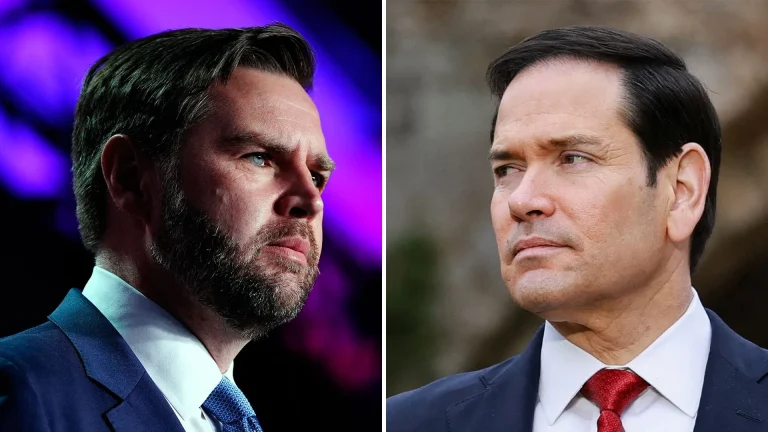
As the political landscape of the United States progresses through the spring of 2026, the Republican Party finds itself navigating a profound structural and ideological transition. President Donald Trump, having secured a non-consecutive second term in the 2024 elections, is constitutionally barred from seeking a third term by the Twenty-second Amendment, despite his intermittent, often provocative musings about challenging the limitation. Consequently, the 2028 presidential election represents a historic anomaly: it will be the first conclusive election since 1880 to feature an entirely open field without an incumbent president on the ballot. This impending vacuum at the apex of the party has precipitated an early, intense, and highly strategic shadow primary, primarily dominated by the two most visible figures in the Trump administration’s second term: Vice President JD Vance and Secretary of State Marco Rubio.
Secretary of State Marco Rubio, currently serving concurrently as the interim National Security Advisor following the nomination of Michael Waltz to the United Nations, occupies a uniquely powerful nexus of diplomatic authority, institutional leverage, and political visibility. Rubio’s trajectory—from a 2016 primary rival whom the populist base once viewed with suspicion, to a central architect of the second Trump administration’s foreign policy—underscores a calculated and highly successful political evolution. His positioning for the 2028 nomination is built upon a multifaceted foundation: an aggressive, interventionist foreign policy apparatus, the intellectual framework of “common-good capitalism,” and an undeniable demographic appeal to the rapidly realigning Hispanic electorate.
This report provides an exhaustive, multi-layered analysis of Marco Rubio’s 2028 presidential prospects. By synthesizing quantitative polling data, predictive market dynamics, geopolitical crises acting as proxy political battles, ideological shifts within conservative philosophy, and the underlying campaign infrastructure, this analysis projects the viability of a Rubio 2028 candidacy. The central thesis asserts that while Vice President JD Vance currently commands the frontrunner status through his direct inheritance of the populist-isolationist base, Rubio has systematically positioned himself as the sole viable consensus candidate capable of unifying the traditional, hawkish national security establishment with the working-class, America First realignment.
Historical Trajectory: The Evolution of an Institutional Survivor
To understand Marco Rubio’s current strategic positioning, one must contextualize his political origins and his proven capacity for ideological adaptation. Marco Antonio Rubio’s ascent through the ranks of Florida and national politics is a testament to his ability to read and ride structural waves within the conservative movement.
The Tea Party Insurgency and Early Institutionalism
Born in Miami in 1971 to Cuban immigrant parents who fled the Batista regime in 1956, Rubio’s political DNA is intrinsically linked to the anti-communist, highly mobilized exile community of South Florida. His early career demonstrated a rapid mastery of local political machinery, transitioning from a city commissioner in West Miami to representing Florida’s 111th House District in 2000. By 2006, he became the youngest person and the first Hispanic to serve as the Speaker of the Florida House of Representatives. During his two-year tenure, Rubio successfully pushed the state legislature aggressively to the political right, while maintaining enough institutional tact to work across the aisle when necessary—a dual approach that would define his later career.
Rubio’s entry onto the national stage occurred during the 2010 midterm elections, a cycle defined by the anti-establishment fervor of the Tea Party movement. Initially viewed as a heavy underdog against the sitting Governor, Charlie Crist, for the Republican Senate nomination, Rubio outflanked Crist from the right, successfully capitalizing on conservative backlash against the Obama administration’s domestic priorities. His decisive victory over both Crist (who ran as an independent) and Democrat Kendrick Meek, capturing 48.9% of the vote, established Rubio as a crown jewel of the new conservative vanguard.
The 2016 Crucible and the MAGA Assimilation
The 2016 presidential primary represented a near-fatal disruption to Rubio’s upward trajectory. Entering the race as the presumed favorite of the neoconservative establishment and the donor class, Rubio was systematically dismantled by the insurgent candidacy of Donald Trump, culminating in a devastating second-place finish in his home state of Florida and his subsequent withdrawal.
However, rather than retreating into private sector exile or joining the “Never Trump” opposition, Rubio engineered a meticulous assimilation into the new MAGA paradigm. By the time of the 2024 election, Rubio had shed the remnants of his Bush-era neoconservative branding, aligning himself with the nationalist and populist tenets of the Trump coalition while retaining his core interventionist instincts. His appointment as Secretary of State in 2025 signaled the completion of this synthesis, transitioning him from a defeated rival to the chief diplomat of the America First agenda. Today, he maneuvers through the administration with a level of influence that forces even veteran Republican operatives to view his public declarations of deference to JD Vance as temporary, strategic maneuvering.
The Geopolitical Crucible: Internecine Rivalry and Proxy Wars
The defining characteristic of the 2026 shadow primary is the high-stakes proxy war being waged between JD Vance and Marco Rubio over the direction of American foreign policy. As Secretary of State and interim National Security Advisor, Rubio possesses direct operational control over the administration’s diplomatic and security apparatus. This consolidation of power has created a stark ideological and stylistic contrast with Vice President Vance, representing a fundamental schism within the contemporary Republican Party: the interventionist, muscular nationalism championed by Rubio versus the restrained, isolationist populism advocated by Vance.
The Iran Conflict: The Ultimate Political Wedge
The most consequential theater for this ideological battle is the ongoing U.S. military operation in Iran, which entered its fifth week in early 2026. The conflict has forced the administration into a politically perilous position, with President Trump’s approval ratings dropping to 36%—the lowest of his second term—driven by widespread public disapproval of the war and the resulting surge in domestic fuel prices. A Marquette Law School Poll conducted in mid-April 2026 confirmed this sentiment, finding high approval for an Iran cease-fire and exceedingly low support for the continuation of the war, with few voters believing U.S. strategic goals have been achieved.
The profound divergence between Rubio and Vance regarding Iran was thrust into the public sphere during a highly publicized, tense Cabinet meeting in the spring of 2026. When asked by President Trump to provide an update on the conflict, Rubio delivered an impassioned, hawkish defense of the military campaign, characterizing the war as “a favor” to the United States and the preservation of global order. His rhetoric framed the intervention not as an unwanted entanglement, but as a necessary assertion of American primacy.
Conversely, Vance, adhering strictly to his long-standing skepticism of foreign military interventions, delivered a sedate and highly evasive assessment. He emphasized that the U.S. now possessed strategic “options” before pointedly redirecting his remarks away from the conflict entirely, choosing instead to wish the deployed troops a happy Easter. Curt Mills, executive director of The American Conservative and a vocal critic of the war, noted that Vance was “literally trying to talk about anything else other than the war,” perfectly illustrating the divergent casts of mind between the two men.
This dynamic interaction serves as a potent distillation of their respective strategic gambles for 2028. Political analysts universally note that the outcome of the Iran conflict will likely act as the primary determinant of the 2028 Republican nominee. If the administration secures a swift, decisive victory that forces Iran to dismantle its nuclear capabilities and guarantees the free flow of oil through the Strait of Hormuz, Rubio will emerge as a vindicated statesman and a steady, dominant hand during a global crisis. His hawkish instincts will be validated, bolstering his executive credentials and proving to the base that strength abroad yields peace at home.
Conversely, if the conflict devolves into a prolonged, asymmetrical quagmire with rising domestic economic costs, the political environment will shift heavily to favor Vance. A prolonged war would allow the Vice President to claim that he consistently reflected the anti-interventionist instincts of the MAGA base without formally breaking ranks with the President, effectively weaponizing the war’s deep unpopularity against Rubio. The urgency of this dynamic is not lost on President Trump, who, facing profound legacy concerns, has reportedly begun asking allies in private consultations the binary question: “JD or Marco?”.
Information Warfare and the Iran Internet Freedom Act
While the kinetic operations in Iran present a political liability, Rubio has effectively utilized his legislative and executive history to support non-kinetic, asymmetric pressure against the Iranian regime. A critical component of his strategy involves funding dissident movements and bypassing the regime’s digital censorship.
Rubio has been a long-standing defender of the bipartisan Iran Internet Freedom Act, which authorized $15 million annually for the Open Technology Fund (OTF) in Fiscal Years 2025 and 2026. During the heightened Iran-Israel conflict and the subsequent U.S. intervention, the Iranian regime sought to impose a near-total digital blackout by throttling bandwidth and shutting down mobile networks. Under Rubio’s State Department, U.S.-funded programs like the Near East Regional Democracy (NERD) program and the Bureau of Democracy, Human Rights, and Labor (DRL) surged resources to maintain virtual private networks (VPNs) and anti-censorship technologies for Iranian civilians.
This limited internet access proved decisive in exposing regime disinformation, allowing videos from inside the country to demonstrate that many Iranians viewed the conflict as an attack on the Ayatollahs rather than the Iranian populace. By championing these programs, Rubio successfully bridges the gap between traditional neoconservative democracy promotion and the populist desire for asymmetric, low-cost warfare that doesn’t rely solely on American troop deployments.
The Venezuelan Extraction and the Projection of Executive Power
While the Middle East remains a vulnerability, Rubio has masterfully utilized the Western Hemisphere to project unilateral American strength, specifically through the unprecedented January 2026 military intervention in Venezuela. On January 3, 2026, the United States executed an overnight joint military extraction in the capital city of Caracas, successfully capturing the incumbent Venezuelan President Nicolás Maduro and his wife, Cilia Flores. The U.S. federal government immediately announced that both individuals had been indicted on severe charges related to narcoterrorism.
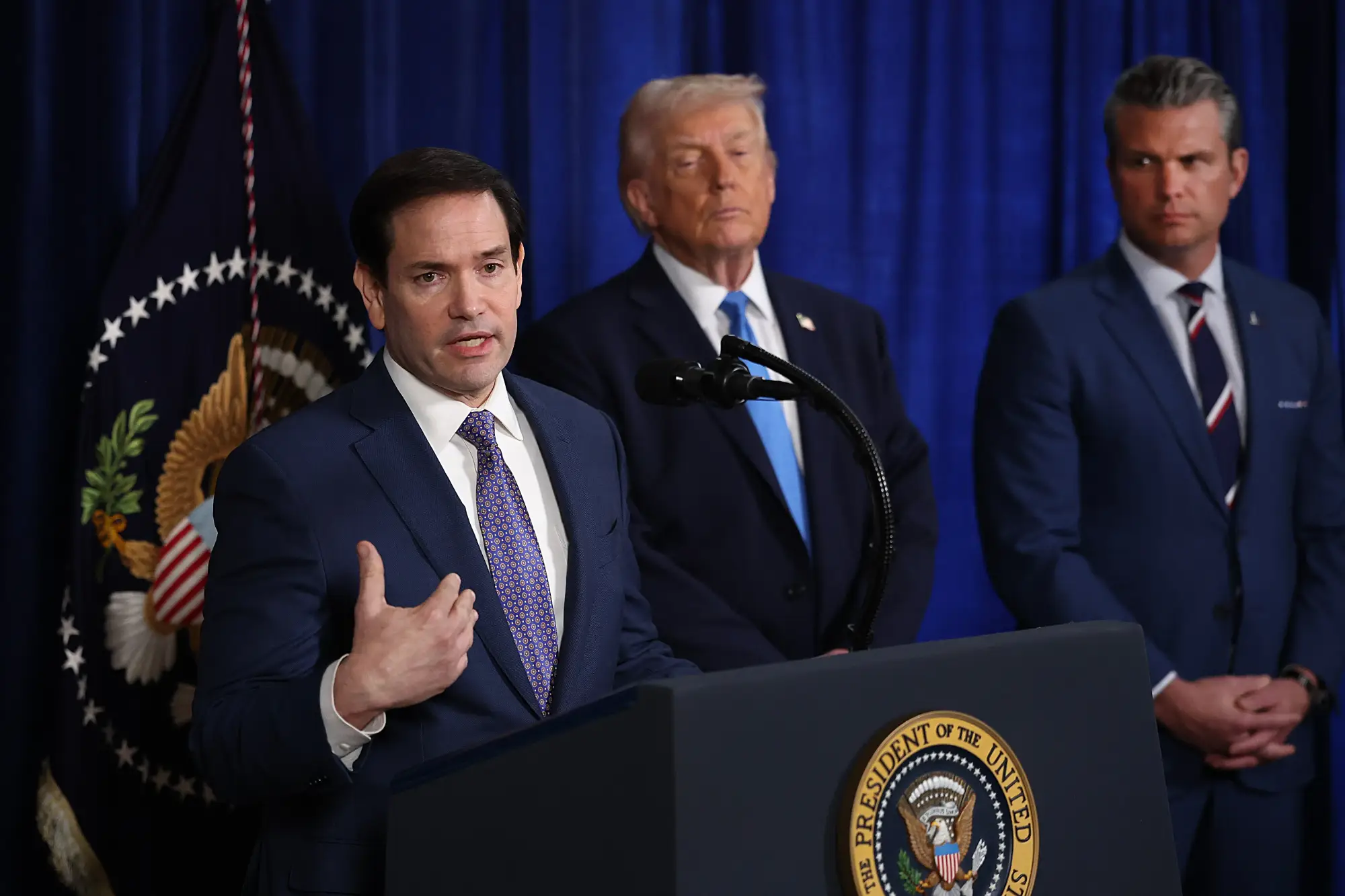
The operation, announced by President Trump in a press conference flanked by Rubio and Secretary of War Pete Hegseth, was a massive projection of hard power and a defining triumph for Rubio’s tenure. Crucially, the administration executed the raid without prior consultation or authorization from Congress, provoking bipartisan frustration regarding the deliberate circumvention of war powers.
When called to testify before the Senate Foreign Relations Committee, Rubio mounted a vigorous defense of the administration’s actions, demonstrating his alignment with the expansive, almost imperial view of executive authority favored by the modern conservative legal movement. When challenged by lawmakers, such as Senator Jeanne Shaheen, on the legal justification and the lack of congressional authorization, Rubio deployed a highly calculated semantic defense, arguing, “This wasn’t an invasion, we didn’t occupy a country”. He further deflected criticisms regarding the lack of legislative briefing by citing stringent operational security, asserting that the raid “wasn’t even in the realm of possible until very late in December” and that the State Department properly deferred to the Pentagon to avoid leaks.
The Venezuelan operation yields immense, multi-layered strategic dividends for Rubio’s 2028 aspirations. First, it satisfies the fervent anti-communist, anti-socialist demands of the vital Florida electorate and the broader national conservative base. Second, it demonstrates a willingness to use decisive military force to secure tangible U.S. economic interests—specifically energy access, which the Trump administration openly and unapologetically cited as a core motivation for the extraction. Finally, his staunch defense of unbridled executive power signals to the institutional right that he is willing to bypass bureaucratic and congressional hurdles to achieve America First objectives, effectively neutralizing ongoing critiques from the populist wing that he is too deferential to the institutional “Deep State.”
Economic Statecraft and the Remaking of the Bureaucracy
Beyond kinetic military operations and regime change, Rubio has structurally transformed the State Department to align with a doctrine of “national capitalism” and “economic statecraft”. This represents a profound shift away from the post-war “Washington Consensus” that historically prioritized free trade, open markets, and liberal internationalism—principles that the pre-2016 Rubio once championed.
The End of the Washington Consensus
During his January 2025 confirmation hearing, Rubio explicitly repudiated the traditional Republican economic orthodoxy, describing the concept of a “liberal world order” as a “dangerous delusion”. He condemned the “almost religious commitment to free and unfettered trade at the expense of our [workers],” signaling the dawn of a highly coercive approach to international economic policy. Under his leadership, the National Security Strategy (NSS) has elevated economic security to the absolute forefront, focusing on balanced trade, critical mineral access, supply-chain independence, reindustrialization, and the preservation of financial preponderance.
This pivot to economic statecraft is highly strategic for a 2028 run. By weaponizing the American economic base as an instrument of geopolitical power, Rubio successfully co-opts the populist economic messaging of JD Vance while applying it on a systemic, institutional scale. Rather than engaging in the unpredictable and episodic tariff bargaining favored by the President, Rubio’s State Department utilizes sanctions, export controls, and investment restrictions as instruments of a coherent, strategic system.
When European leaders gathered at the Munich Security Conference in early 2026, Rubio’s keynote address was received with a mix of tentative reassurance and underlying unease. While European Commission President Ursula von der Leyen called his remarks “very reassuring” compared to JD Vance’s explicitly abrasive and culturally hostile address at the same conference the previous year, the underlying message of Rubio’s diplomacy was clear: American alliances are strictly transactional and entirely contingent upon reciprocal economic and security benefits. Private conversations among European officials revealed deep concern over the emerging reality that American isolationism was being replaced not by partnership, but by American imperialism.
Weaponizing the Bureaucracy: Visa Bans and Foreign Aid Overhaul
Rubio has not hesitated to use the bureaucratic mechanisms of the State Department to enforce this new geopolitical reality, often targeting both foreign adversaries and domestic ideological opponents. In a move signaling the start of this new Kulturkampf, Washington imposed sweeping visa bans on five European officials, including former EU commissioner Thierry Breton, accusing them of utilizing EU regulations (such as the Digital Services Act) to pressure U.S. technology firms into censoring “American viewpoints they oppose”.
Furthermore, Rubio has weaponized his authority under INA 212(a)(3)(C)—which allows the exclusion of individuals whose entry would have serious adverse foreign policy consequences—to implement aggressive new visa restriction policies. On March 14, 2025, he announced a policy excluding individuals involved in the forced return of Uyghurs to China. Domestically, he has requested Justice Department investigations into left-wing organizations like CODEPINK, baselessly accusing them of maintaining illicit ties to China under the Foreign Assistance Registration Act. While these actions draw fierce condemnation from liberal and anti-war advocacy groups—who argue Rubio mischaracterizes diplomacy and attacks constitutional free speech—they resonate deeply with the conservative base, proving his willingness to aggressively combat the political left.
In a sweeping overhaul of international obligations, Rubio cited “poor financial and ethical governance” as the justification for President Trump’s decision to withdraw the United States from numerous international organizations in January 2025. For those organizations that still receive U.S. funding, Congress passed legislation directing Rubio to enforce written agreements mandating timely access for the State Department’s Inspector General and the U.S. Comptroller General to audit their financial data.
Simultaneously, Rubio executed Executive Order 14169, which instituted a 90-day pause on all new foreign development assistance obligations for USAID and other agencies, ensuring a complete realignment with “America First” priorities. To enforce ideological compliance within the diplomatic corps, he implemented the “One Voice” policy via Executive Order 14211, mandating that all foreign service officers faithfully implement the President’s policy, with any failure serving as grounds for professional discipline or termination. In a move anticipating the total dismantling of the Department of Education, Rubio’s State Department also absorbed the management of international education programs, including Title VI and Fulbright-Hays, bringing them under the strict purview of the Bureau of Educational and Cultural Affairs.
Ideological Realignment: “Common-Good Capitalism” and Working-Class Appeal
If foreign policy provides the aggressive, kinetic thrust of Rubio’s 2028 campaign, his domestic ideological framework, heavily branded as “common-good capitalism,” provides its intellectual architecture. Recognizing that the Republican base has irrevocably shifted toward working-class populism, Rubio has sought to build a philosophical bridge between traditional conservative values and the profound economic anxieties of blue-collar workers.
The Catholic Intellectual Tradition
Rubio’s ideological pivot is deeply rooted in traditional Catholic Social Teaching, drawing specifically upon Pope Leo XIII’s seminal 1891 encyclical, Rerum Novarum. In public addresses, including a cornerstone speech at the Catholic University of America titled “Human Dignity and the Purpose of Capitalism,” Rubio argued forcefully that laissez-faire capitalism must be bridled by profound moral obligations. He contends that the market economy, when left entirely to its own devices to maximize profit, can interfere with the building of strong communities and the preservation of human dignity.
By reviving 19th-century papal writings that originally addressed the systemic exploitation of workers during the Industrial Revolution, Rubio draws direct and potent parallels to the contemporary American economy, which he describes as inherently “disordered”. He critiques both major political parties: condemning establishment conservatives for neglecting the fundamental rights of workers in favor of corporate consolidation, and criticizing progressives for relying on state-mandated wealth redistribution rather than fostering a cooperative, organic partnership between labor and capital.
This philosophy offers a highly sophisticated, intellectualized alternative to JD Vance’s visceral, often grievance-driven populism. While Vance channels the raw anger of the deindustrialized Rust Belt, Rubio’s “common-good capitalism” provides a high-minded, morally grounded justification for state intervention in the economy to protect families and local communities. Organizations aligned with this vision, such as the Heritage Foundation, praise this approach for its insistence on drawing “the rich and the working class together” while simultaneously maintaining a fundamental respect for traditional authority and institutional order. As highlighted by the recent translation of the 17th-century treatise On the Duties of Merchants, a growing contingent of conservatives, including Senator Josh Hawley, are rallying behind this framework to attack corporate malfeasance without abandoning capitalist structures entirely.
The Vatican Clash: Navigating Factional Divides
The prominence of Catholicism within the administration’s upper echelons—both Rubio and Vance are devout Catholics—has also exposed deep internal fractures within the conservative movement. These religious and political fault lines were violently exposed in early 2026 during an unprecedented diplomatic clash between President Trump and Pope Leo XIV.
Following a series of severe, highly personal public insults directed at the Pontiff by the President—in which Trump labeled the Pope “WEAK on crime” and “terrible on foreign policy”—the administration faced immense, organized backlash from Catholic voter coalitions that had been instrumental in delivering Trump’s recent electoral victories. Organizations like CatholicVote.org, led by Kelsey Reinhardt, demanded an immediate apology, condemning the breakdown in basic diplomatic decorum and calling a meme depicting Trump as Jesus “blasphemous”. Brian Burch, the American ambassador to the Holy See, was reportedly placed in a “really horrible position” by the diplomatic fallout.
The administration’s response to this crisis highlighted the intense strategic rivalry between its two heirs apparent. Rather than Rubio—who, as Secretary of State, is the chief diplomat and a frequent Mass-goer—taking point on the crisis, President Trump explicitly chose Vice President JD Vance to publicly defend the administration’s remarks. Political observers immediately noted that Trump “wheeled out” Vance to “sweat in front of the cameras,” essentially forcing the Vice President to compromise his own deep reverence for papal authority in a brutal loyalty test to the President.
Throughout this geopolitical and spiritual crisis, Marco Rubio remained notably, strategically silent. By successfully avoiding the controversy entirely, Rubio preserved his standing with traditional, mass-going Catholic voters while simultaneously avoiding the political trap of explicitly rebuking the President. This highly calculated evasion underscores his political dexterity, allowing Vance to absorb the full collateral damage of Trump’s erratic behavior while Rubio maintained an aura of unbothered diplomatic professionalism.
Demographic Restructuring: Immigration Enforcement and the Hispanic Realignment
A central pillar of the modern Republican coalition is the accelerating rightward shift among Hispanic and Latino voters, a demographic realignment that fundamentally alters the electoral calculus for 2028. As the highest-ranking Hispanic official in U.S. history, Marco Rubio possesses an intrinsic, structural advantage in consolidating and expanding these vital electoral gains.
The 2024 Catalyst and the Shifting Latino Electorate
The 2024 presidential election served as a profound watershed moment for Hispanic conservatism. Polling and exit data revealed that Donald Trump won approximately 43% of the overall Latino vote, representing a staggering eight-point increase from his 2020 performance. The shift was particularly pronounced among young Latino men under the age of 40, 48% of whom supported Trump. Fully 20% of these young male supporters were first-time voters, driven heavily by immediate economic concerns, the rising cost of living, and an explicit rejection of progressive cultural messaging.
This rightward drift occurred despite controversies, such as the September 2024 presidential debate where Donald Trump amplified false news stories regarding Haitian immigrants in Ohio—demonstrating that economic anxieties heavily outweighed concerns over racially charged rhetoric for many working-class Latino voters. Despite these gains, the Latino electorate remains complex and stubbornly non-monolithic. While conservative shifts are evident, a September 2026 Pew Research survey found that on a national level, generic Democratic candidates still hold an advantage over Republicans among Latinos (57% to 39% for Vice President Kamala Harris in a hypothetical matchup). However, the margins are rapidly narrowing, and the voting bloc wields outsized, decisive influence in critical sunbelt swing states such as Arizona, Nevada, and Georgia.
Executive Actions on Immigration and Border Security
Rubio’s strategy to capture and solidify this demographic relies on leaning heavily into enforcement-focused immigration policies, explicitly rejecting the outdated conventional wisdom that Hispanic voters universally favor lenient border enforcement. Rubio has been unambiguous in his rhetoric, stating plainly to the press that “Hispanic voters are not in favor of illegal immigration”. This strict alignment with the border policies of the Trump administration resonates strongly with naturalized citizens and multi-generational Hispanic voters in states like Florida and Texas, who increasingly view unchecked illegal immigration as a direct economic and security threat to their own communities.
Crucially, Rubio has not merely rhetorically supported strict immigration policies; he has aggressively wielded the regulatory power of the State Department to enact them. In March 2025, Rubio issued a sweeping and highly controversial determination declaring that all federal efforts related to border control, immigration, and cross-border transactions fall permanently under the “foreign affairs function exemption” of the Administrative Procedure Act (APA). This unprecedented move effectively bypassed the standard, time-consuming public notice-and-comment periods typically required for federal rulemaking, granting the administration the power to rapidly and unilaterally implement stringent immigration protocols without public interference.
Furthermore, Rubio utilized his authority under INA 212(a)(3)(C) to implement aggressive new visa restriction policies aimed directly at the facilitation of illegal migration. On March 5, 2025, he announced targeted exclusions against foreign government officials—specifically including foreign customs, airport, and port authority personnel—who knowingly facilitated illegal migration to the United States’ southwest border. In a further tightening of the student visa system, the Department of State updated 9 FAM 402.5 regarding F, M, and J visas, adding strict new requirements that F-1 students must demonstrate an intent to solely pursue a full course of study, severely limiting backdoor immigration avenues.
These executive actions serve a potent dual purpose. From a policy perspective, they align perfectly with the administration’s core directive to secure the border. From a political perspective, they establish an ironclad, concrete record of enforcement that completely insulates Rubio from potential attacks by hardline nativists within the GOP primary base, proving that a Hispanic candidate can be an uncompromising, ruthless enforcer of national sovereignty.
Quantitative Landscape: Polling, Predictive Markets, and the Threat of a Democratic Wave
The empirical data available in early 2026 provides a clear taxonomy of the 2028 Republican primary field, mapping the contours of the Vance-Rubio rivalry against the broader backdrop of a highly volatile national electorate.
National and State-Level Primary Polling
The polling data universally points to a consolidated two-man race, with remaining candidates—such as Governor Ron DeSantis, Donald Trump Jr., and Nikki Haley—relegated to single-digit irrelevance.
The Yale Youth Poll, conducted between March 9-23, 2026, offers the most comprehensive demographic breakdown of the GOP primary electorate. Overall, Vance commands 43% support among Republican primary voters, while Rubio securely holds the second-place position with 17%. Crucially, no other candidate achieves double digits; Donald Trump Jr. sits at 9%, and Ron DeSantis, once considered the future of the party, struggles at a dismal 6%. (The poll also noted that in a hypothetical scenario where Donald Trump could unconstitutionally run again, he would take 47% of the vote, dropping Vance to 18% and Rubio to 8%).
The geographic distribution of this support further solidifies the Vance-Rubio dichotomy, while exposing Vance’s reliance on specific regions. In Nevada, a state critical for its early primary status and western demographic representation, an Emerson College poll reveals Vance leading with a dominant 63%, while Rubio and DeSantis languish at 7% and 6%, respectively. However, the landscape appears significantly more competitive in the Northeast. Polling from late March 2026 indicates that Rubio and Vance are the definitive frontrunners in the crucial state of New Hampshire, running neck-and-neck and leaving DeSantis and Haley tied for a distant third.
A highly indicative metric of shifting base sentiment is the Conservative Political Action Conference (CPAC) straw poll conducted in Grapevine, Texas, in late March 2026. Historically serving as the most accurate barometer for the highly energized, activist factions of the “Make America Great Again” (MAGA) base, the 2026 results demonstrated a massive tightening of the race. While Vance won the poll with 53%, this represented a steep 12-point decline from the previous year. Conversely, Rubio surged by an astonishing 32 percentage points to capture 35% of the vote. (Other candidates, including DeSantis, Trump Jr., and Ted Cruz, remained irrelevant in the 1-2% range). This dramatic upward mobility among the party’s most populist vanguard suggests that Rubio’s aggressive actions in the State Department—particularly in Venezuela—are successfully neutralizing Vance’s monopolistic claim over the MAGA coalition.
Demographic Stratification
The demographic cross-tabulations of the 2026 polling data reveal deep structural divides in the Republican coalition, highlighting both opportunities and vulnerabilities for a Rubio candidacy.
| Demographic Group | JD Vance Support | Marco Rubio Support | Notable Third Candidate | Source Data |
| Overall GOP Primary | 38% – 43% | 17% – 25% | Don Jr. (9%), DeSantis (6%) | |
| Ages 18-34 | 35% | 12% | Don Jr. (18%), DeSantis (6%) | |
| Ages 35-44 | Data aggregated | 15% | Pence (7%), DeSantis (6%) | |
| Ages 45-64 | 46% | Data aggregated | DeSantis (5%) | |
| Ages 65+ (Seniors) | 39% | 20% | DeSantis (7%), Don Jr. (6%) | |
| Latino Republicans/Ind. | 24% | Data aggregated | Don Jr. (24%), DeSantis (9%) | |
| Black Republicans/Ind. | 14% | 12% | Don Jr. (23%) |
A February 2026 demographic deep-dive indicates that Vance’s lead is highly dependent on older, white, self-identified Republicans—the traditional, high-turnout primary base. However, Vance exhibits marked, critical vulnerabilities among Independent voters leaning Republican. Within this crucial swing demographic, an alarming 46% of respondents select “someone else,” while Vance earns only 19%, marginally ahead of Rubio at 12%. This exceptionally high degree of uncertainty among Independents suggests an unmet demand for an alternative to the Vice President.
Furthermore, educational divides present a strategic opening for Rubio. College-educated Republicans are statistically more likely to reject the current frontrunners, with 25% selecting “someone else”. Rubio’s historic appeal to suburban, college-educated conservatives positions him well to consolidate this skeptical bloc as the primary season approaches. Conversely, Vance performs best among non-college voters (40%), while younger voters (18-34) present a challenge for both men, as Donald Trump Jr. pulls a surprisingly strong 18% in that demographic.
Predictive Markets and Job Approval Headwinds
Prediction markets, which aggregate the financial stakes of political observers and often filter out the noise of single-cycle polling, heavily favor a Vance-Rubio showdown.
| Prediction Market Metric | Leading Candidate | Second Place | Third Place | Source |
| Kalshi: 2028 GOP Nominee | JD Vance (38%) | Marco Rubio (25%) | Tucker Carlson (5.1%) | |
| Kalshi: 2028 Overall Winner | JD Vance (19%) | Gavin Newsom (18%) | Marco Rubio (13%) | |
| Skybet: 2028 Overall Winner | JD Vance (7/2) | Gavin Newsom (7/2) | Marco Rubio (17/2) | |
| Kalshi: 2028 GOP VP Nominee | Marco Rubio (26%) | JD Vance (6.3%) | Glenn Youngkin (5.9%) |
The Kalshi prediction market prices JD Vance at a 38% implied probability of securing the nomination, with Marco Rubio trading strongly at a 25% probability. Skybet oddsmakers mirror these sentiments, placing JD Vance and potential Democratic nominee Gavin Newsom at 7/2 odds, with Marco Rubio closely behind at 17/2. Interestingly, Kalshi markets also track the 2028 Republican Vice Presidential nominee, where Marco Rubio commands a leading 26% probability, suggesting that market participants view him as an indispensable electoral asset to the ticket, regardless of whether he secures the top position.
However, Marco Rubio must navigate the inherent political liabilities of serving as Secretary of State during a period of intense global volatility and domestic dissatisfaction.
| Trump Admin Official | Net Favorability (All Adults) | Net Favorability (Republicans) | Source |
| Marco Rubio | -12 (33% Fav / 45% Unfav) | Net Positive (Data Aggregated) | |
| JD Vance | -13 (39% Fav / 52% Unfav) | Net Positive (Data Aggregated) | |
| Pete Hegseth | -21 (25% Fav / 46% Unfav) | Net Positive (Data Aggregated) | |
| Donald Trump | -22 (38% Fav / 60% Unfav) | Net Positive (Data Aggregated) | |
| Pam Bondi | -39 (19% Fav / 58% Unfav) | Net Negative (Data Aggregated) |
Public opinion polling from April 2026 reveals a polarized national electorate. A Quinnipiac poll indicates that 40% of voters approve of Rubio’s handling of his role as Secretary of State, while 47% disapprove, leaving him slightly underwater nationally. A separate Marquette Law School Poll found Rubio with a net favorability of -12 among all adults.
In the context of a Republican primary, however, these numbers require nuanced interpretation. Among Republican voters, Rubio commands a strong net positive favorability, largely paralleling his overall job approval within the conservative base. Notably, Rubio and Vance maintain the least negative ratings among all Trump administration officials surveyed, positioning them far ahead of deeply unpopular figures like Defense Secretary Pete Hegseth, Kash Patel, or former Attorney General Pam Bondi.
The 2026 Midterm Threat and Structural Openings
Perhaps the most crucial exogenous variable affecting Rubio’s 2028 chances is the impending 2026 midterm elections. The Interactive Brokers Forecast Trader market indicates a staggering 85% probability that the Democratic Party will seize control of the US House of Representatives in November 2026, leaving the Republicans with only a 15% chance of retaining power.
This predictive data aligns with the Yale Youth Poll, which found Democrats leading the 2026 generic ballot by 2 points overall, with massive leads among younger demographics (D+23 for ages 18-22; D+30 for ages 23-29). Young voters are vehemently opposing the administration, driven by overwhelming concerns regarding the cost of living (84%), healthcare (75%), and deep skepticism toward Artificial Intelligence and executive overreach. Furthermore, 50% of voters support eliminating or severely reducing funding for Immigration and Customs Enforcement (ICE).
If a Democratic wave materializes in 2026, resulting in the loss of the House, it will profoundly alter the 2028 Republican primary dynamics. A devastating midterm loss would be interpreted as a direct referendum on the Trump-Vance populist agenda. This structural collapse would instantly validate Rubio’s underlying argument: that the party requires a competent, experienced institutionalist who can maintain the America First policy framework while projecting an aura of stability necessary to win back the suburban and independent voters repelled by Vance’s abrasive populism.
Furthermore, Rubio will be monitoring the highly fragmented 2028 Democratic primary field, where Kamala Harris (20%), Gavin Newsom (19%), Pete Buttigieg (14%), and Alexandria Ocasio-Cortez (13%) are locked in a generational battle. Young Democrats heavily favor progressive policies (56%) and candidates like AOC, while seniors favor Newsom. A fractured, left-leaning Democratic ticket would provide the perfect foil for Rubio’s “common-good capitalism” to appeal to moderate swing voters.
The Shadow Campaign: Infrastructure, Donors, and Plausible Deniability
While Marco Rubio has publicly vowed not to challenge JD Vance for the 2028 nomination, veteran Republican operatives view this commitment as highly malleable—a calculated maneuver designed to avoid provoking the ire of a President known for demanding absolute loyalty. The reality on the ground is that a sophisticated, albeit quiet, shadow campaign infrastructure is already in place, waiting to be activated.
America 2100 and the Establishment Donor Class
The most visible mechanism for a potential Rubio presidential run is “America 2100,” a 501(c)(4) political nonprofit organization founded in 2023 by Mike Needham, Rubio’s top political counselor and former chief of staff. The group’s slogan—”Ensuring the next century is an American century”—deliberately echoes the optimistic messaging of Rubio’s 2016 presidential campaign.
While the organization has remained largely dormant since circulating videos in late 2024 to bolster the Trump-Vance ticket, it retains nearly $3 million in the bank according to recent IRS filings. More importantly than its current cash reserves is its immense structural utility. As a 501(c)(4) dark money group, America 2100 is not legally required to disclose its contributors. This provides a highly discreet, secure conduit for major GOP donors—particularly the Wall Street, tech, and corporate establishment figures who are increasingly alienated by JD Vance’s hostility toward corporate power—to park capital and quietly express their financial support for a Rubio alternative.
This institutional, dark-money approach stands in stark contrast to JD Vance’s reliance on the Rockbridge Network, a secretive donor group he co-founded in 2019 during his stint as a private investor, which held its recent spring summit behind closed doors in Nashville. The battle between America 2100 and the Rockbridge Network represents the financial proxy war mirroring the ideological Vance-Rubio divide. Should Vance falter under the weight of an unpopular Iran war, or should Trump’s endorsement become an open question following a 2026 midterm defeat, America 2100 serves as a fully operational, fully funded launchpad that can be activated instantly, allowing Rubio to bypass the traditional, sluggish early-campaign fundraising phases.
Conclusion: Strategic Outlook for 2028
The trajectory of the 2028 Republican presidential nomination hinges upon an intricate, highly volatile balance of ideological signaling, demographic alignment, and unpredictable global events. While Vice President JD Vance enters the shadow primary as the undeniable heir apparent—buoyed by the structural advantage of the vice presidency and a tight, visceral grip on the white, rural populist base—his vulnerabilities are profound and mathematically limiting. Vance’s severe weakness among independent voters, his alienation of the traditional donor class, his entanglement in the deeply unpopular Iran conflict, and the inherent electoral limits of grievance-based populism create a distinct, highly viable lane for a formidable challenger.
Secretary of State Marco Rubio has meticulously engineered his tenure to occupy and expand that exact lane. By synthesizing a hawkish, executive-driven foreign policy with the working-class economic philosophy of “common-good capitalism,” Rubio presents a unique synthesis of the pre-Trump establishment and the post-Trump MAGA movement. His unyielding, bureaucratically ruthless stance on immigration enforcement, combined with his historic and expanding appeal to the rapidly realigning Hispanic electorate, provides a demographic counterweight to Vance’s rust-belt focus that the party desperately needs to secure a national majority.
Ultimately, Marco Rubio’s 2028 odds are intrinsically tethered to the outcome of the administration’s current geopolitical gambles. Should his muscular, interventionist policies—from the extraction in Venezuela to the economic statecraft deployed against Europe and China—yield decisive victories that project American strength without resulting in protracted, economically devastating quagmires, Rubio will possess an unrivaled executive resume. Backed by a sophisticated, dark-money donor infrastructure and a refined intellectual framework capable of uniting the fractured conservative coalition, Marco Rubio is not merely a viable alternative for 2028; he is the most formidable, structurally sound strategic threat to an uncontested Vance coronation.