
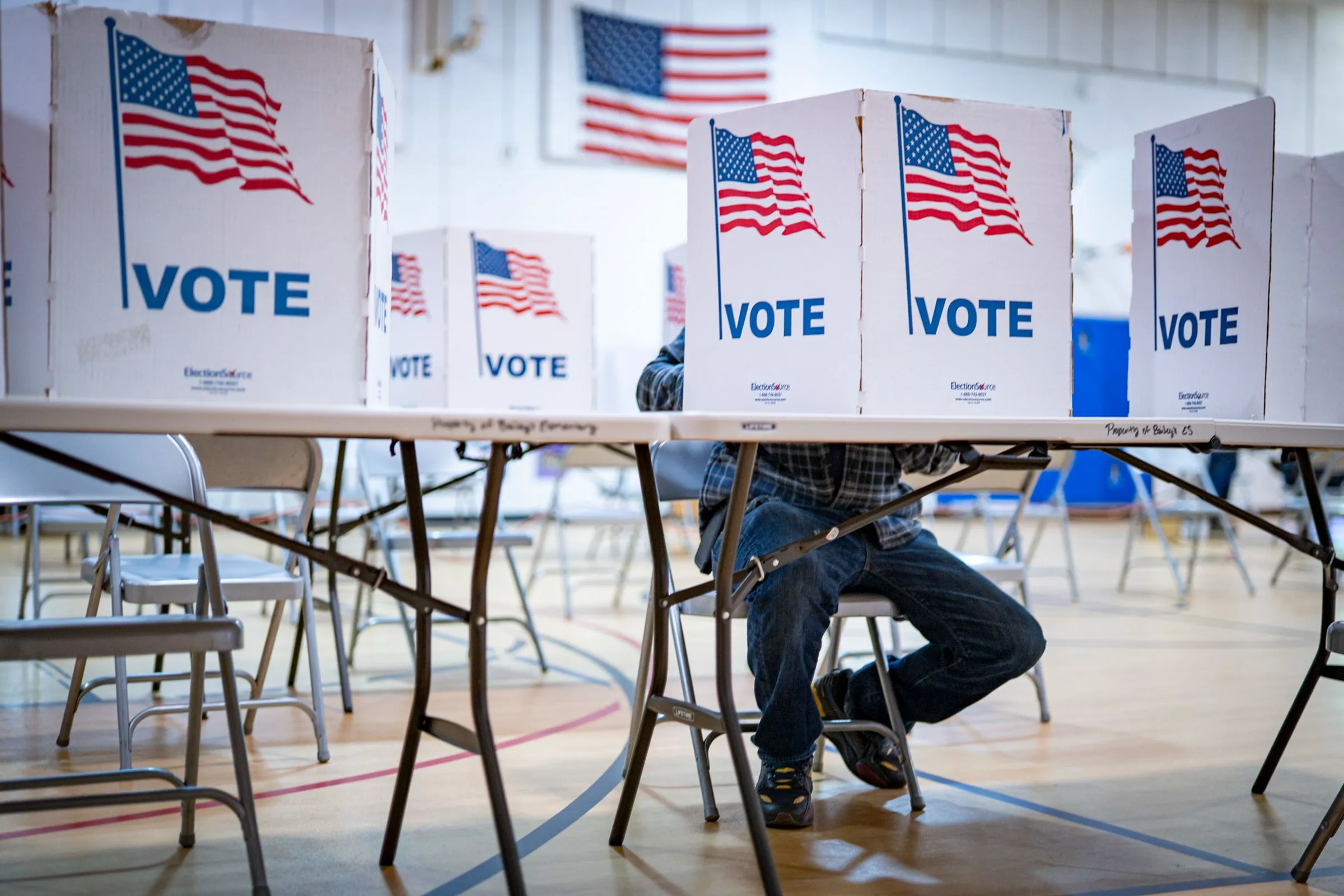
Trump brings his nonsense about mail-in ballots to Republicans’ Virginia defeat
President Donald Trump has lied for years that elections Republicans lost fair and square were “rigged” by mail-in ballots. On Wednesday, he brought his familiar playbook to the aftermath of the Virginia redistricting referendum Republicans lost on Tuesday.
As with Trump’s many lies about the 2020 election he lost, his narrative about the Virginia defeat doesn’t hold up to even the most basic of scrutiny.
Here’s some of what Trump posted on his Truth Social platform Wednesday afternoon: “A RIGGED ELECTION TOOK PLACE LAST NIGHT IN THE GREAT COMMONWEALTH OF VIRGINIA! All day long Republicans were winning, the Spirit was unbelievable, until the very end when, of course, there was a massive ‘Mail In Ballot Drop!’ Where have I heard that before — And the Democrats eked out another Crooked Victory!”
That is just not what happened.
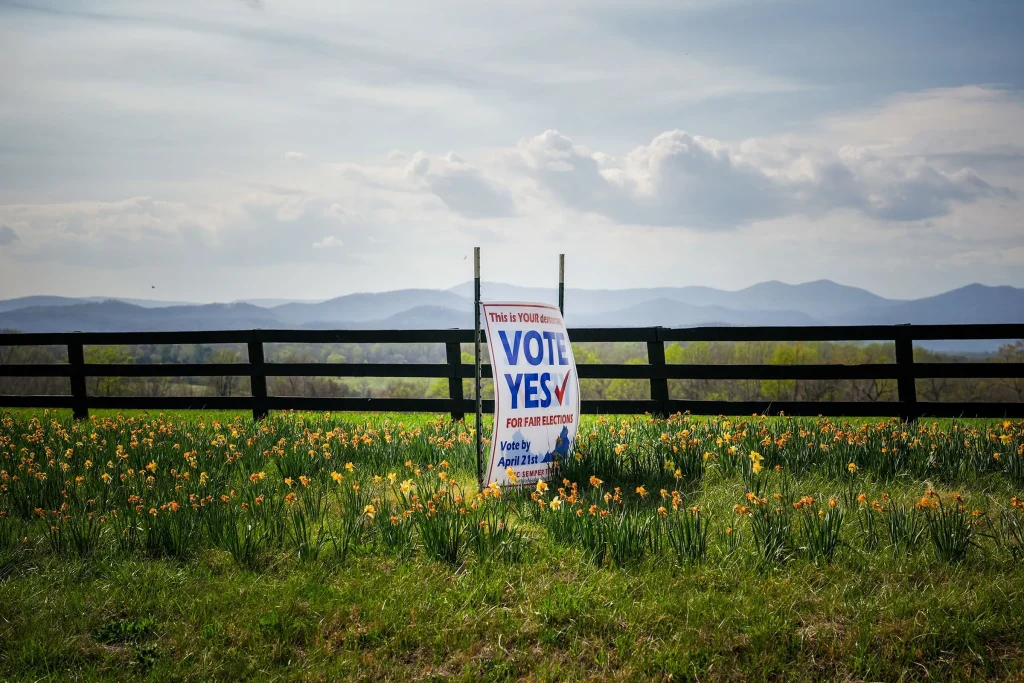
The ‘Yes’ side backed by Democrats was favored to win throughout the vote count, even when the ‘No’ side was leading
It’s true that the “No” side preferred by Trump and most other Republicans – the side that wanted to reject a new temporary gerrymandered congressional map that will likely mean Democrats win additional US House seats in the midterms – was leading in the Virginia vote count for a bit over an hour and a half after polls closed around 7 p.m. on Tuesday.
But that doesn’t mean it ever appeared to knowledgeable people that the “No” side was actually going to win.
Even when “No” had this early lead, elections analysts, The New York Times’ vote-tracking forecast model and many observers said “Yes” was highly likely to prevail. That’s because it was clear that the “No” side was falling short of the vote totals it needed to rack up to counteract the expected “Yes” deluge from the populous Democratic-dominated counties – notably including Fairfax County in Northern Virginia, the most populous in the state – that hadn’t fully reported their votes.
“Kind of reminds me of the old, more competitive days in VA when the Rs would lead before the Fairfax hammer dropped,” Kyle Kondik, managing editor of Sabato’s Crystal Ball at the University of Virginia, posted on X at 7:59 p.m., while “No” still had its lead before Fairfax reported.
For “No” to win, there would have had to be a shift of more than the 15.4 percentage points by which Democrat Abigail Spanberger won Virginia’s race for governor in 2025. Even before “Yes” took the lead in the count, it was clear from various counties that had reported most of their vote that “No” was falling short of that pace.
For example, Roanoke County, one of the larger counties that went for the “No” side, was over 90% reporting at about 8:10 p.m.; at that point, there had been a roughly 12-point shift from its margin in the 2025 gubernatorial race. That’s substantial, but still less than what “No” needed.
It’s possible some Republicans briefly had the optimistic “Spirit” Trump suggested they did, but the writing was on the wall for many political operatives, too, even before “Yes” pulled ahead in the count.
Marc Short, chair of former Vice President Mike Pence’s conservative organization Advancing American Freedom and Pence’s chief of staff during the first Trump presidency, assumed a “Yes” victory in a 7:56 p.m. X post – in which he said the results were “tracking like” the 2025 Virginia attorney general race that was won by a Democrat, Jay Jones, who had been plagued by controversy.
On Wednesday, a judge in southern Virginia blocked the state from certifying the result of the referendum (on several grounds, including that, in his view, state lawmakers did not follow their own rules in passing the referendum); Jones quickly said he would appeal. The state Supreme Court stayed a previous ruling by the same judge in the runup to the referendum and allowed Tuesday’s vote to proceed before deciding the merits of that case, which is still pending.
There was nothing suspicious about the vote totals from Democratic-dominated counties
Regardless of the eventual outcome of these legal battles, there was precisely zero evidence on Wednesday of outcome-changing fraud with mail-in ballots – either with the mail-in votes themselves or with counties’ reporting of them.
First, it’s standard for populous urban counties with a large number of voters to take longer to fully count their votes than small rural counties with fewer voters – and even Virginia’s urban counties counted quite quickly in this one-question referendum. They reported early enough for numerous media outlets to make projections of a “Yes” victory less than two hours after the polls closed. (CNN’s projection came at 8:51 p.m.)
“The fact that small towns count faster than huge counties is an impressively dumb reason to complain,” Aaron Fritschner, deputy chief of staff to Democratic Rep. Don Beyer, who represents parts of Northern Virginia, wrote on X in response to Trump’s claims; Fritschner wrote that the Tuesday count happened at “light speed by Virginia counting standards.”
Second, there was nothing that appeared abnormal about the vote totals in major Democratic-dominated counties that reported a bit later than others on Tuesday.
Fairfax County, home to tens of thousands of federal workers, went 69.5% for the “Yes” side on Tuesday; in Virginia’s 2025 election, it went 73.8% for Spanberger in the governor race and 68.4% for Jones in the attorney general race. The city of Richmond went 82.8% for “Yes” on Tuesday; in 2025, it went 86.7% for Spanberger and 82.2% for Jones.
First, it’s standard for populous urban counties with a large number of voters to take longer to fully count their votes than small rural counties with fewer voters – and even Virginia’s urban counties counted quite quickly in this one-question referendum. They reported early enough for numerous media outlets to make projections of a “Yes” victory less than two hours after the polls closed. (CNN’s projection came at 8:51 p.m.)
“The fact that small towns count faster than huge counties is an impressively dumb reason to complain,” Aaron Fritschner, deputy chief of staff to Democratic Rep. Don Beyer, who represents parts of Northern Virginia, wrote on X in response to Trump’s claims; Fritschner wrote that the Tuesday count happened at “light speed by Virginia counting standards.”
Second, there was nothing that appeared abnormal about the vote totals in major Democratic-dominated counties that reported a bit later than others on Tuesday.
Fairfax County, home to tens of thousands of federal workers, went 69.5% for the “Yes” side on Tuesday; in Virginia’s 2025 election, it went 73.8% for Spanberger in the governor race and 68.4% for Jones in the attorney general race. The city of Richmond went 82.8% for “Yes” on Tuesday; in 2025, it went 86.7% for Spanberger and 82.2% for Jones.