The 2028 Republican Nomination: An Analysis of Marco Rubio’s Strategic Positioning, Ideological Realignment, and Electoral Prospects
The Venezuelan Extraction and the Projection of Executive Power
While the Middle East remains a vulnerability, Rubio has masterfully utilized the Western Hemisphere to project unilateral American strength, specifically through the unprecedented January 2026 military intervention in Venezuela. On January 3, 2026, the United States executed an overnight joint military extraction in the capital city of Caracas, successfully capturing the incumbent Venezuelan President Nicolás Maduro and his wife, Cilia Flores. The U.S. federal government immediately announced that both individuals had been indicted on severe charges related to narcoterrorism.
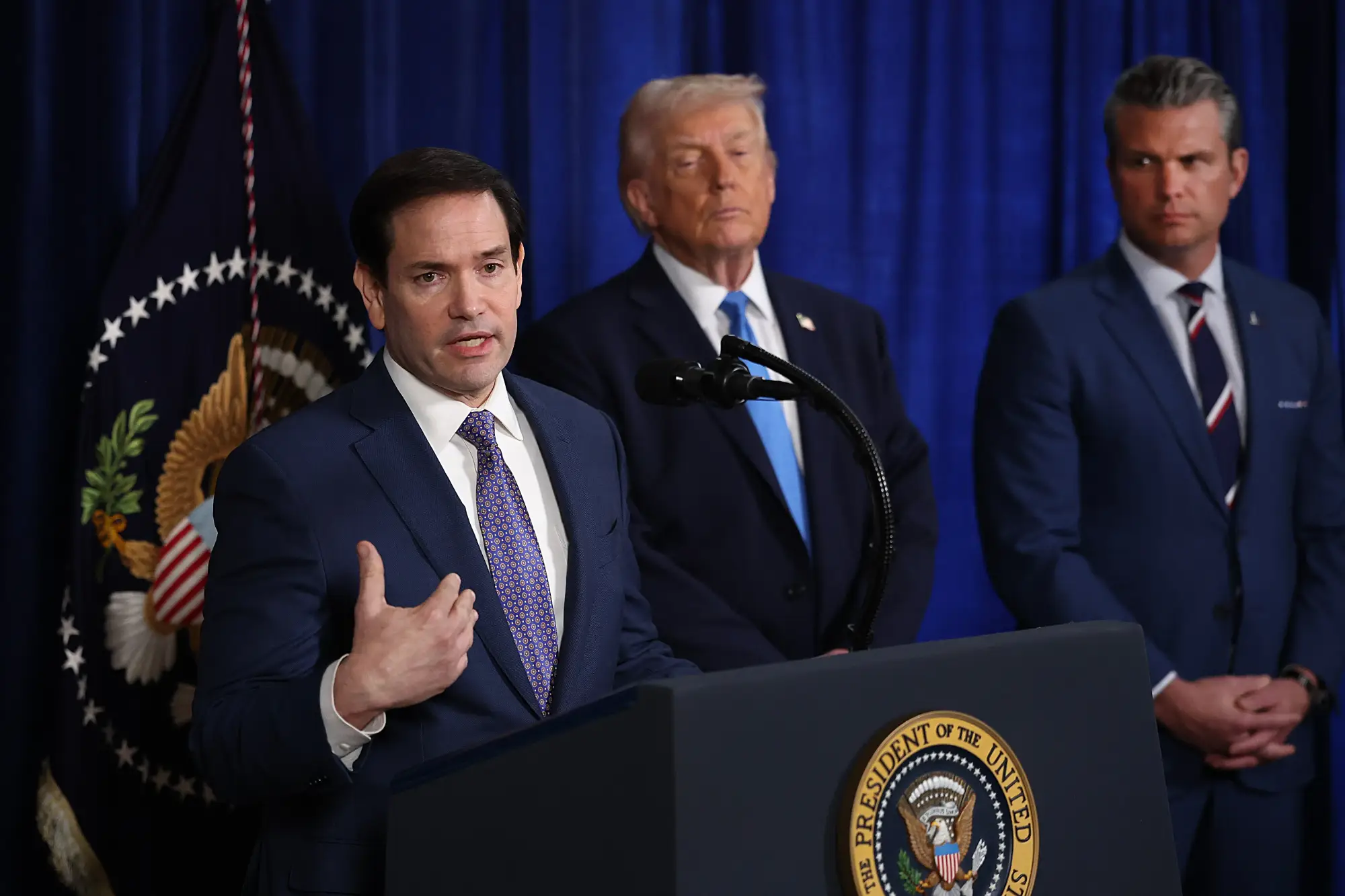
The operation, announced by President Trump in a press conference flanked by Rubio and Secretary of War Pete Hegseth, was a massive projection of hard power and a defining triumph for Rubio’s tenure. Crucially, the administration executed the raid without prior consultation or authorization from Congress, provoking bipartisan frustration regarding the deliberate circumvention of war powers.
When called to testify before the Senate Foreign Relations Committee, Rubio mounted a vigorous defense of the administration’s actions, demonstrating his alignment with the expansive, almost imperial view of executive authority favored by the modern conservative legal movement. When challenged by lawmakers, such as Senator Jeanne Shaheen, on the legal justification and the lack of congressional authorization, Rubio deployed a highly calculated semantic defense, arguing, “This wasn’t an invasion, we didn’t occupy a country”. He further deflected criticisms regarding the lack of legislative briefing by citing stringent operational security, asserting that the raid “wasn’t even in the realm of possible until very late in December” and that the State Department properly deferred to the Pentagon to avoid leaks.
The Venezuelan operation yields immense, multi-layered strategic dividends for Rubio’s 2028 aspirations. First, it satisfies the fervent anti-communist, anti-socialist demands of the vital Florida electorate and the broader national conservative base. Second, it demonstrates a willingness to use decisive military force to secure tangible U.S. economic interests—specifically energy access, which the Trump administration openly and unapologetically cited as a core motivation for the extraction. Finally, his staunch defense of unbridled executive power signals to the institutional right that he is willing to bypass bureaucratic and congressional hurdles to achieve America First objectives, effectively neutralizing ongoing critiques from the populist wing that he is too deferential to the institutional “Deep State.”
Economic Statecraft and the Remaking of the Bureaucracy
Beyond kinetic military operations and regime change, Rubio has structurally transformed the State Department to align with a doctrine of “national capitalism” and “economic statecraft”. This represents a profound shift away from the post-war “Washington Consensus” that historically prioritized free trade, open markets, and liberal internationalism—principles that the pre-2016 Rubio once championed.
The End of the Washington Consensus
During his January 2025 confirmation hearing, Rubio explicitly repudiated the traditional Republican economic orthodoxy, describing the concept of a “liberal world order” as a “dangerous delusion”. He condemned the “almost religious commitment to free and unfettered trade at the expense of our [workers],” signaling the dawn of a highly coercive approach to international economic policy. Under his leadership, the National Security Strategy (NSS) has elevated economic security to the absolute forefront, focusing on balanced trade, critical mineral access, supply-chain independence, reindustrialization, and the preservation of financial preponderance.
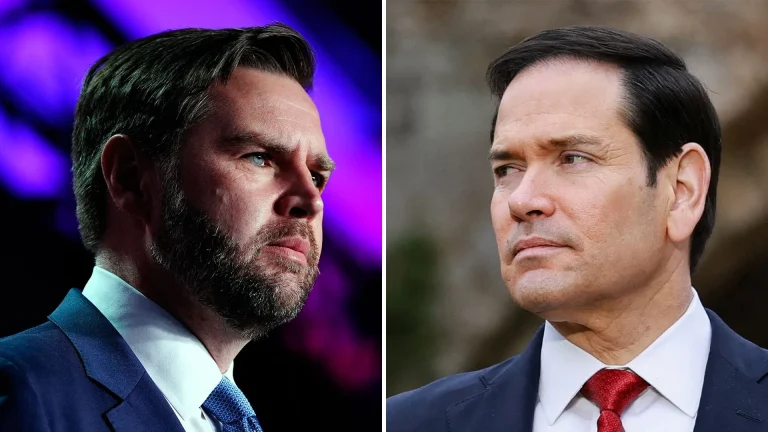
This pivot to economic statecraft is highly strategic for a 2028 run. By weaponizing the American economic base as an instrument of geopolitical power, Rubio successfully co-opts the populist economic messaging of JD Vance while applying it on a systemic, institutional scale. Rather than engaging in the unpredictable and episodic tariff bargaining favored by the President, Rubio’s State Department utilizes sanctions, export controls, and investment restrictions as instruments of a coherent, strategic system.
When European leaders gathered at the Munich Security Conference in early 2026, Rubio’s keynote address was received with a mix of tentative reassurance and underlying unease. While European Commission President Ursula von der Leyen called his remarks “very reassuring” compared to JD Vance’s explicitly abrasive and culturally hostile address at the same conference the previous year, the underlying message of Rubio’s diplomacy was clear: American alliances are strictly transactional and entirely contingent upon reciprocal economic and security benefits. Private conversations among European officials revealed deep concern over the emerging reality that American isolationism was being replaced not by partnership, but by American imperialism.