The 2028 Republican Nomination: An Analysis of Marco Rubio’s Strategic Positioning, Ideological Realignment, and Electoral Prospects
The Geopolitical Crucible: Internecine Rivalry and Proxy Wars
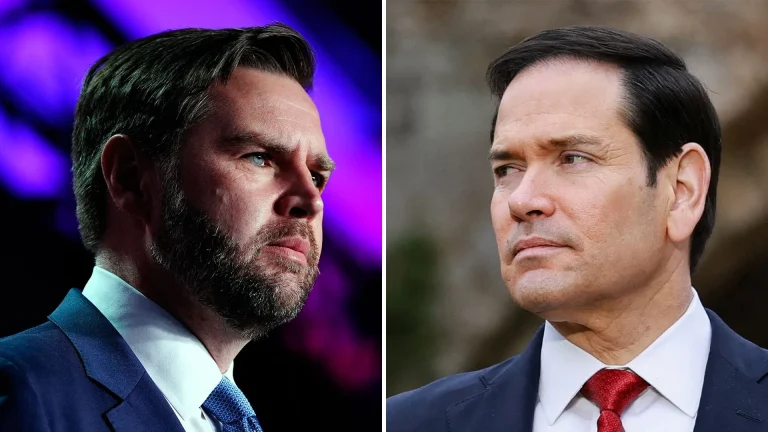
The defining characteristic of the 2026 shadow primary is the high-stakes proxy war being waged between JD Vance and Marco Rubio over the direction of American foreign policy. As Secretary of State and interim National Security Advisor, Rubio possesses direct operational control over the administration’s diplomatic and security apparatus. This consolidation of power has created a stark ideological and stylistic contrast with Vice President Vance, representing a fundamental schism within the contemporary Republican Party: the interventionist, muscular nationalism championed by Rubio versus the restrained, isolationist populism advocated by Vance.
The Iran Conflict: The Ultimate Political Wedge
The most consequential theater for this ideological battle is the ongoing U.S. military operation in Iran, which entered its fifth week in early 2026. The conflict has forced the administration into a politically perilous position, with President Trump’s approval ratings dropping to 36%—the lowest of his second term—driven by widespread public disapproval of the war and the resulting surge in domestic fuel prices. A Marquette Law School Poll conducted in mid-April 2026 confirmed this sentiment, finding high approval for an Iran cease-fire and exceedingly low support for the continuation of the war, with few voters believing U.S. strategic goals have been achieved.
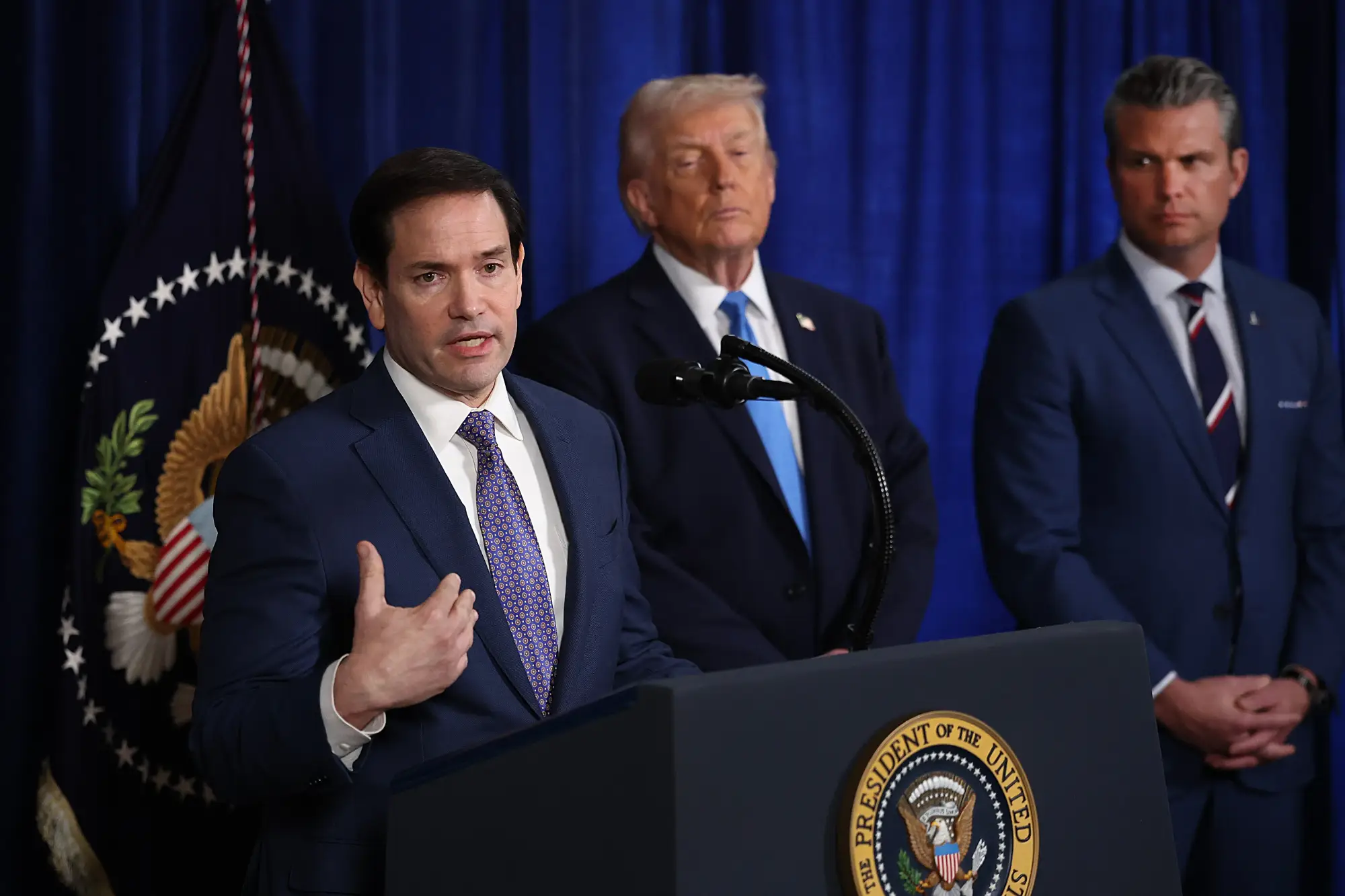
The profound divergence between Rubio and Vance regarding Iran was thrust into the public sphere during a highly publicized, tense Cabinet meeting in the spring of 2026. When asked by President Trump to provide an update on the conflict, Rubio delivered an impassioned, hawkish defense of the military campaign, characterizing the war as “a favor” to the United States and the preservation of global order. His rhetoric framed the intervention not as an unwanted entanglement, but as a necessary assertion of American primacy.
Conversely, Vance, adhering strictly to his long-standing skepticism of foreign military interventions, delivered a sedate and highly evasive assessment. He emphasized that the U.S. now possessed strategic “options” before pointedly redirecting his remarks away from the conflict entirely, choosing instead to wish the deployed troops a happy Easter. Curt Mills, executive director of The American Conservative and a vocal critic of the war, noted that Vance was “literally trying to talk about anything else other than the war,” perfectly illustrating the divergent casts of mind between the two men.
This dynamic interaction serves as a potent distillation of their respective strategic gambles for 2028. Political analysts universally note that the outcome of the Iran conflict will likely act as the primary determinant of the 2028 Republican nominee. If the administration secures a swift, decisive victory that forces Iran to dismantle its nuclear capabilities and guarantees the free flow of oil through the Strait of Hormuz, Rubio will emerge as a vindicated statesman and a steady, dominant hand during a global crisis. His hawkish instincts will be validated, bolstering his executive credentials and proving to the base that strength abroad yields peace at home.
Conversely, if the conflict devolves into a prolonged, asymmetrical quagmire with rising domestic economic costs, the political environment will shift heavily to favor Vance. A prolonged war would allow the Vice President to claim that he consistently reflected the anti-interventionist instincts of the MAGA base without formally breaking ranks with the President, effectively weaponizing the war’s deep unpopularity against Rubio. The urgency of this dynamic is not lost on President Trump, who, facing profound legacy concerns, has reportedly begun asking allies in private consultations the binary question: “JD or Marco?”.
Information Warfare and the Iran Internet Freedom Act
While the kinetic operations in Iran present a political liability, Rubio has effectively utilized his legislative and executive history to support non-kinetic, asymmetric pressure against the Iranian regime. A critical component of his strategy involves funding dissident movements and bypassing the regime’s digital censorship.
Rubio has been a long-standing defender of the bipartisan Iran Internet Freedom Act, which authorized $15 million annually for the Open Technology Fund (OTF) in Fiscal Years 2025 and 2026. During the heightened Iran-Israel conflict and the subsequent U.S. intervention, the Iranian regime sought to impose a near-total digital blackout by throttling bandwidth and shutting down mobile networks. Under Rubio’s State Department, U.S.-funded programs like the Near East Regional Democracy (NERD) program and the Bureau of Democracy, Human Rights, and Labor (DRL) surged resources to maintain virtual private networks (VPNs) and anti-censorship technologies for Iranian civilians.
This limited internet access proved decisive in exposing regime disinformation, allowing videos from inside the country to demonstrate that many Iranians viewed the conflict as an attack on the Ayatollahs rather than the Iranian populace. By championing these programs, Rubio successfully bridges the gap between traditional neoconservative democracy promotion and the populist desire for asymmetric, low-cost warfare that doesn’t rely solely on American troop deployments.