The 2028 Republican Nomination: An Analysis of Marco Rubio’s Strategic Positioning, Ideological Realignment, and Electoral Prospects
Historical Trajectory: The Evolution of an Institutional Survivor
To understand Marco Rubio’s current strategic positioning, one must contextualize his political origins and his proven capacity for ideological adaptation. Marco Antonio Rubio’s ascent through the ranks of Florida and national politics is a testament to his ability to read and ride structural waves within the conservative movement.
The Tea Party Insurgency and Early Institutionalism
Born in Miami in 1971 to Cuban immigrant parents who fled the Batista regime in 1956, Rubio’s political DNA is intrinsically linked to the anti-communist, highly mobilized exile community of South Florida. His early career demonstrated a rapid mastery of local political machinery, transitioning from a city commissioner in West Miami to representing Florida’s 111th House District in 2000. By 2006, he became the youngest person and the first Hispanic to serve as the Speaker of the Florida House of Representatives. During his two-year tenure, Rubio successfully pushed the state legislature aggressively to the political right, while maintaining enough institutional tact to work across the aisle when necessary—a dual approach that would define his later career.
Rubio’s entry onto the national stage occurred during the 2010 midterm elections, a cycle defined by the anti-establishment fervor of the Tea Party movement. Initially viewed as a heavy underdog against the sitting Governor, Charlie Crist, for the Republican Senate nomination, Rubio outflanked Crist from the right, successfully capitalizing on conservative backlash against the Obama administration’s domestic priorities. His decisive victory over both Crist (who ran as an independent) and Democrat Kendrick Meek, capturing 48.9% of the vote, established Rubio as a crown jewel of the new conservative vanguard.
The 2016 Crucible and the MAGA Assimilation
The 2016 presidential primary represented a near-fatal disruption to Rubio’s upward trajectory. Entering the race as the presumed favorite of the neoconservative establishment and the donor class, Rubio was systematically dismantled by the insurgent candidacy of Donald Trump, culminating in a devastating second-place finish in his home state of Florida and his subsequent withdrawal.
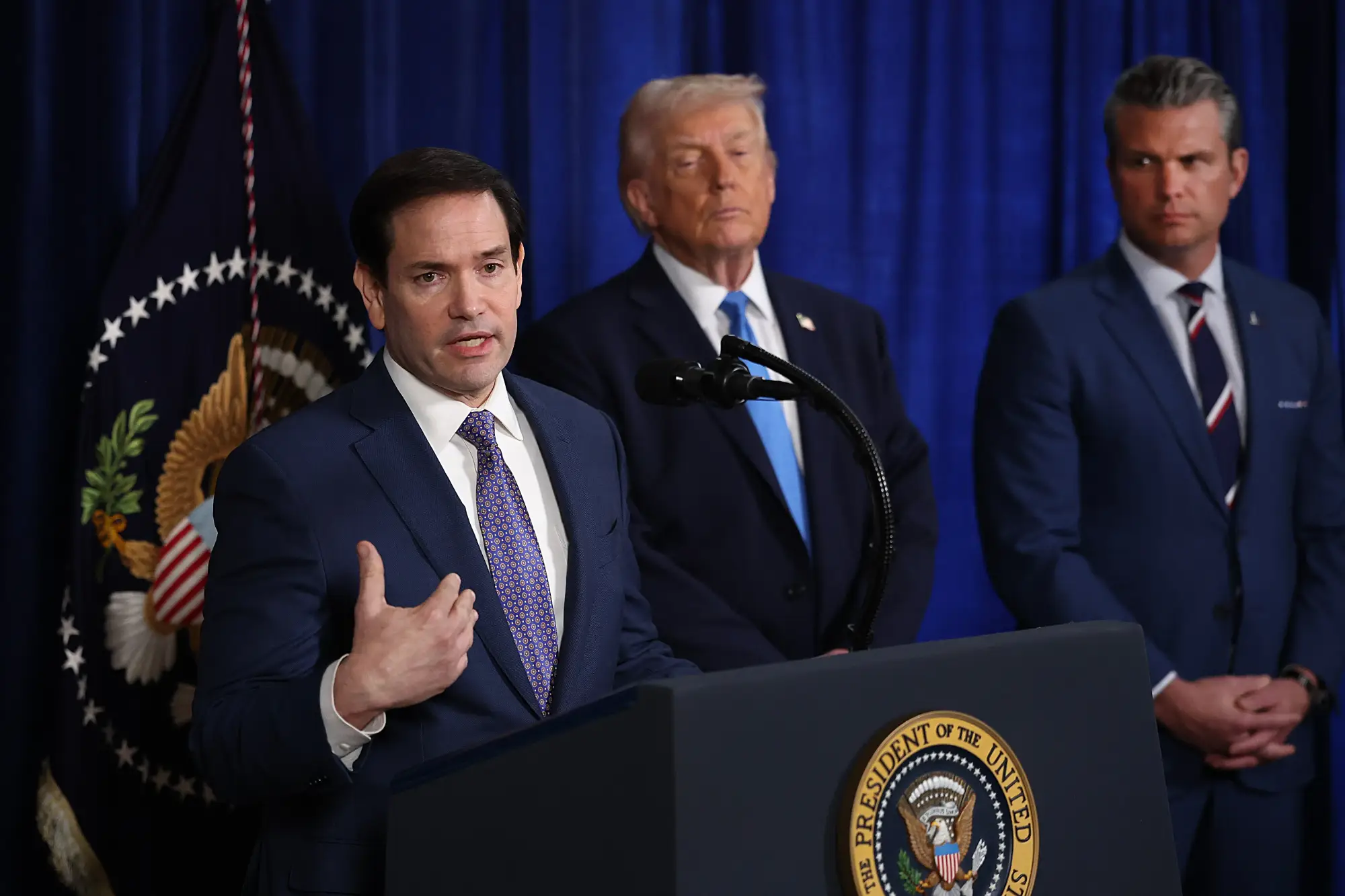
However, rather than retreating into private sector exile or joining the “Never Trump” opposition, Rubio engineered a meticulous assimilation into the new MAGA paradigm. By the time of the 2024 election, Rubio had shed the remnants of his Bush-era neoconservative branding, aligning himself with the nationalist and populist tenets of the Trump coalition while retaining his core interventionist instincts. His appointment as Secretary of State in 2025 signaled the completion of this synthesis, transitioning him from a defeated rival to the chief diplomat of the America First agenda. Today, he maneuvers through the administration with a level of influence that forces even veteran Republican operatives to view his public declarations of deference to JD Vance as temporary, strategic maneuvering.